Have you ever reacted more strongly than a situation seemed to justify?
Have you ever disliked something in another person and wondered why it bothered you so much?
Do you sometimes feel disconnected from parts of yourself that used to feel alive?
Have you ever felt like there is more to you than you allow yourself, or others, to see?
If your quiz result was The Shadow Self, these questions may feel familiar.
The Shadow Self is perhaps the most misunderstood identity pattern.
Many people hear the word shadow and assume it refers to the worst parts of themselves.
The parts they dislike.
The parts they wish would disappear.
But the shadow is often something very different.
The shadow is not simply where we hide the parts we dislike.
It is often where we hide the parts that once felt unsafe to express.
The purpose of this article is not to help you discover what is wrong with you.
It is to help you rediscover what you may have left behind.
Because understanding what you have hidden may be the first step towards becoming whole again.
What Is The Shadow Self?
The Shadow Self is not your personality.
The Shadow Self is not your true identity.
The Shadow Self is an adaptation.
At some point in life, certain parts of you began to feel unsafe, unacceptable or unwanted.
Perhaps you were criticised.
Perhaps you were judged.
Perhaps you learned that certain emotions weren’t welcome.
Perhaps you learned that expressing certain qualities created conflict, embarrassment or rejection.
Over time, those parts were hidden away.
Not destroyed.
Not removed.
Not eliminated.
Hidden.
The Shadow Self develops when we decide:
“This part of me is not acceptable.”
The part is then pushed into the background.
Out of awareness.
Out of sight.
Out of conscious expression.
The problem is that hidden parts do not disappear.
They simply wait.
How The Shadow Self Shows Up In Everyday Life
You may recognise yourself in several of these statements:
You suppress difficult emotions.
You struggle to identify what you are feeling.
You reject parts of yourself you don’t like.
You often say:
“That’s just not me.”
without fully exploring whether it might be.
You feel disconnected from parts of your personality.
You hide aspects of yourself from other people.
You are highly self-critical.
You sometimes feel like something is missing.
You struggle with self-acceptance.
You often feel less whole than you appear.
If several of these resonate, the Shadow Self may be influencing more of your life than you realise.
A Conversation With An Old University Friend
A few years ago I caught up with an old university friend.
During our conversation they said something that stopped me.
“I don’t know where the confident version of me went.”
At first it sounded as though confidence had disappeared.
As we continued talking, a different picture emerged.
Growing up, confidence often attracted criticism.
Standing out felt uncomfortable.
Expressing opinions felt risky.
Over time they spoke less boldly.
Shared less openly.
Occupied less space.
Eventually they stopped identifying as confident altogether.
Then something occurred to me.
The confidence wasn’t gone.
It had been criticised.
Judged.
Hidden.
The confidence wasn’t lost.
It was waiting.
Many people experience something similar.
Not only with confidence.
With creativity.
Assertiveness.
Leadership.
Playfulness.
Sensitivity.
Ambition.
The qualities we believe we have lost are often hidden rather than gone.
Your Shadow May Contain Your Greatest Strengths
This surprises many people.
Most assume the shadow contains only negative qualities.
Anger.
Jealousy.
Fear.
Insecurity.
Sometimes it does.
But many people also hide qualities that are deeply valuable.
A child criticised for being “too much” may hide confidence.
A child criticised for standing out may hide ambition.
A child criticised for expressing emotions may hide sensitivity.
A child criticised for being creative may hide self-expression.
A child criticised for speaking up may hide leadership.
The Shadow Self is not simply where we hide what we dislike.
It is often where we hide what others discouraged.
This is why shadow work is not only about healing pain.
It is about reclaiming strengths.
What The Shadow Self Is Really Afraid Of
Beneath the pattern there is often a fear of:
- Rejection
- Criticism
- Judgement
- Embarrassment
- Disapproval
- Shame
The hidden belief becomes:
Certain parts of me are not acceptable.
The Shadow Self believes safety comes from hiding those parts.
The logic is understandable.
If expressing something once resulted in pain, hiding it can feel like protection.
But protection and freedom are not always the same thing.
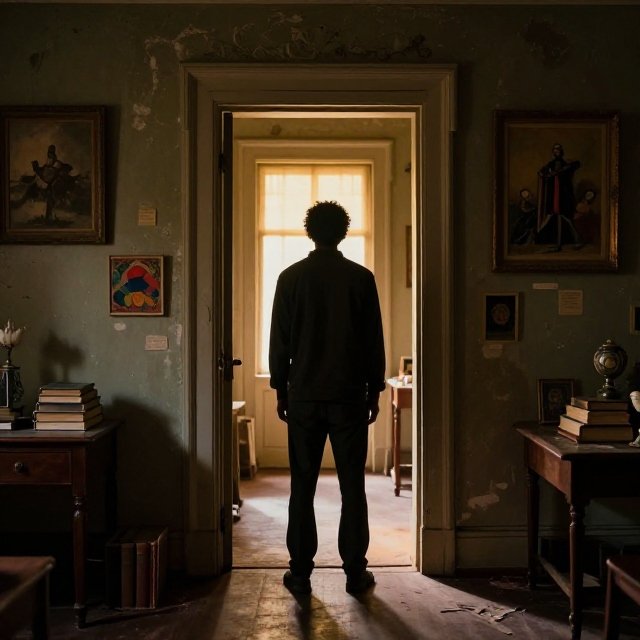
The Locked Room
Imagine your identity as a house.
Most rooms are open.
You move through them freely.
Other people can see them.
You are comfortable being there.
But somewhere inside that house is a locked room.
Inside that room are the parts of yourself that once felt unacceptable.
The room might contain:
- Anger
- Sadness
- Fear
- Confidence
- Creativity
- Ambition
- Sensitivity
- Authenticity
The contents vary from person to person.
The important thing to understand is this:
Locking the room did not remove what was inside.
It only removed access to it.
The room remains part of the house.
Just as those traits remain part of you.
Why You Feel Like Something Is Missing
Many people with a strong Shadow Self pattern describe a strange feeling.
Not sadness.
Not anxiety.
Not emptiness.
Just a persistent sense that something is missing.
Often they are right.
Because they have spent years disconnected from parts of themselves.
The mind experiences this separation as incompleteness.
A feeling that life is somehow smaller than it could be.
Less expressive.
Less authentic.
Less alive.
The solution is not becoming somebody new.
The solution is reclaiming what was left behind.
The Hidden Cost Nobody Talks About
Every adaptation has a cost.
The Shadow Self often pays through:
- Disconnection
- Emotional numbness
- Internal conflict
- Reduced authenticity
- Identity confusion
- Chronic self-judgement
But the greatest cost is not that parts of you become hidden.
The greatest cost is that life becomes smaller.
Every hidden part takes some energy with it.
Every locked room reduces access to the whole house.
Over time, the version of yourself available to the world becomes smaller and smaller.
And eventually, the version of yourself available to you becomes smaller too.
Sometimes The Shadow Appears In Other People
One of the strangest things about the shadow is that we often notice it in others before we notice it in ourselves.
The qualities we strongly admire or strongly dislike can reveal forgotten parts of ourselves.
For example:
Someone who suppresses confidence may feel irritated by confident people.
Someone who hides ambition may criticise ambitious people.
Someone who rejects vulnerability may feel uncomfortable around emotionally open people.
Someone who buries creativity may envy creative people.
This doesn’t happen every time.
But our strongest reactions often contain clues.
The shadow has a curious habit of introducing itself through other people.
What We Reject Often Controls Us
Many people attempt to eliminate parts of themselves.
Suppress them.
Ignore them.
Deny them.
Fight them.
The problem is that rejected parts rarely disappear.
They simply operate from the background.
What is hidden remains active.
What is denied remains influential.
What is suppressed continues seeking expression.
The shadow gains power when it is ignored.
It loses power when it is understood.
Integration begins when we stop fighting ourselves.
The Question Every Shadow Self Must Answer
At some point every Shadow Self encounters a powerful question:
What part of myself have I spent the most energy trying not to see?
The answer is often surprising.
And often revealing.
Because the answer may not be a weakness.
It may be a strength waiting to come home.
The Transformation: From Shadow Self To Integrated Self
The solution is not to become someone new.
The solution is not to eliminate difficult emotions.
The solution is not perfection.
The transformation is much deeper than that.
The Integrated Self understands:
I do not become whole by removing parts of myself.
I become whole by reclaiming them.
The goal is not to approve of everything within yourself.
The goal is to acknowledge what is there.
Because what is acknowledged can be understood.
And what is understood can be integrated.
What The Integrated Self Looks Like
The Integrated Self:
- Recognises all emotions.
- Accepts complexity.
- Expresses authenticity.
- Understands hidden strengths.
- Feels more whole.
- Lives with greater self-awareness.
- Embraces both strengths and limitations.
Most importantly:
The Integrated Self no longer needs to reject parts of themselves in order to feel worthy.
Three Practical Exercises
1. The Trigger Exercise
Notice qualities in other people that create a disproportionately strong reaction.
Ask yourself:
What does this reaction reveal about me?
Sometimes our strongest reactions point towards hidden parts of ourselves.
2. The Lost Qualities Exercise
Complete this sentence:
A part of myself I used to express more freely was…
Then ask:
- What happened?
- Who discouraged it?
- Why did I hide it?
- What would happen if I reclaimed it?
This exercise often reveals qualities that have been waiting quietly in the background for years.
3. Revisit An Older Version Of Yourself
Think about a younger version of yourself.
What qualities were expressed more naturally?
What felt easier?
What felt more alive?
Which qualities disappeared?
And are they truly gone?
Or simply hidden?
Reflection Questions
Consider journalling on the following:
- What qualities do I hide from others?
- What emotions feel hardest to accept?
- What parts of myself did I learn to suppress?
- Which strengths might I have buried?
- What would wholeness look like in my life?
- What part of me is asking to be seen?
The Truth About The Shadow Self
The Shadow Self helped you survive.
The Shadow Self is not your enemy.
The Shadow Self was trying to protect you.
It believed hiding certain parts of yourself would keep you safe.
Perhaps it once did.
But there comes a point when an old strategy begins limiting growth.
The answer is not rejection.
The answer is integration.
The answer is reclaiming the parts of yourself you were never meant to lose.
Final Thoughts
The Shadow Self believes safety comes from hiding certain parts of who you are.
The Integrated Self discovers that wholeness comes from welcoming them back.
The goal is not to become someone new.
The goal is to stop abandoning parts of the person you have always been.
The goal is not perfection.
The goal is integration.
To unlock the room.
To turn on the light.
To reclaim what was never truly lost.
That is healing.
That is wholeness.
You are not broken.
You are not your pattern.
You are not your fears.
The Shadow Self is not your identity.
It is a strategy.
It helped you navigate life.
It served a purpose.
But it is not the whole of who you are.
Beneath every survival pattern is a deeper self waiting to be rediscovered.
That is the journey of becoming yourself.
Continue Your Journey
Understanding your Shadow Self pattern is only the first step.
True self-discovery rarely comes from a single insight.
It comes from gradually understanding your values, behaviours, motivations, strengths and the patterns shaping your life.
If you’d like to explore yourself more deeply, I invite you to try some of my other personal and professional development quizzes.
Each one offers a different perspective on who you are and how you can grow.
Explore more quizzes here: Personal Development Quizzes – Aimhigherbebetter.com
Join The Waitlist For Become Yourself
If this article resonated with you, I’d love to invite you to join the waitlist for my upcoming book:
Become Yourself
A guide to understanding the patterns, adaptations and identities that shape our lives, helping us reconnect with who we truly are and build a life that feels authentic, meaningful and our own.
Join the waitlist here: A Three‑Book Journey to Understand Yourself, Transform Your Relationships, and Lead From Your Identity – Aimhigherbebetter.com